The EFMD Conference for Deans and Directors General of business schools highlighted the need for environmentally sustainable development
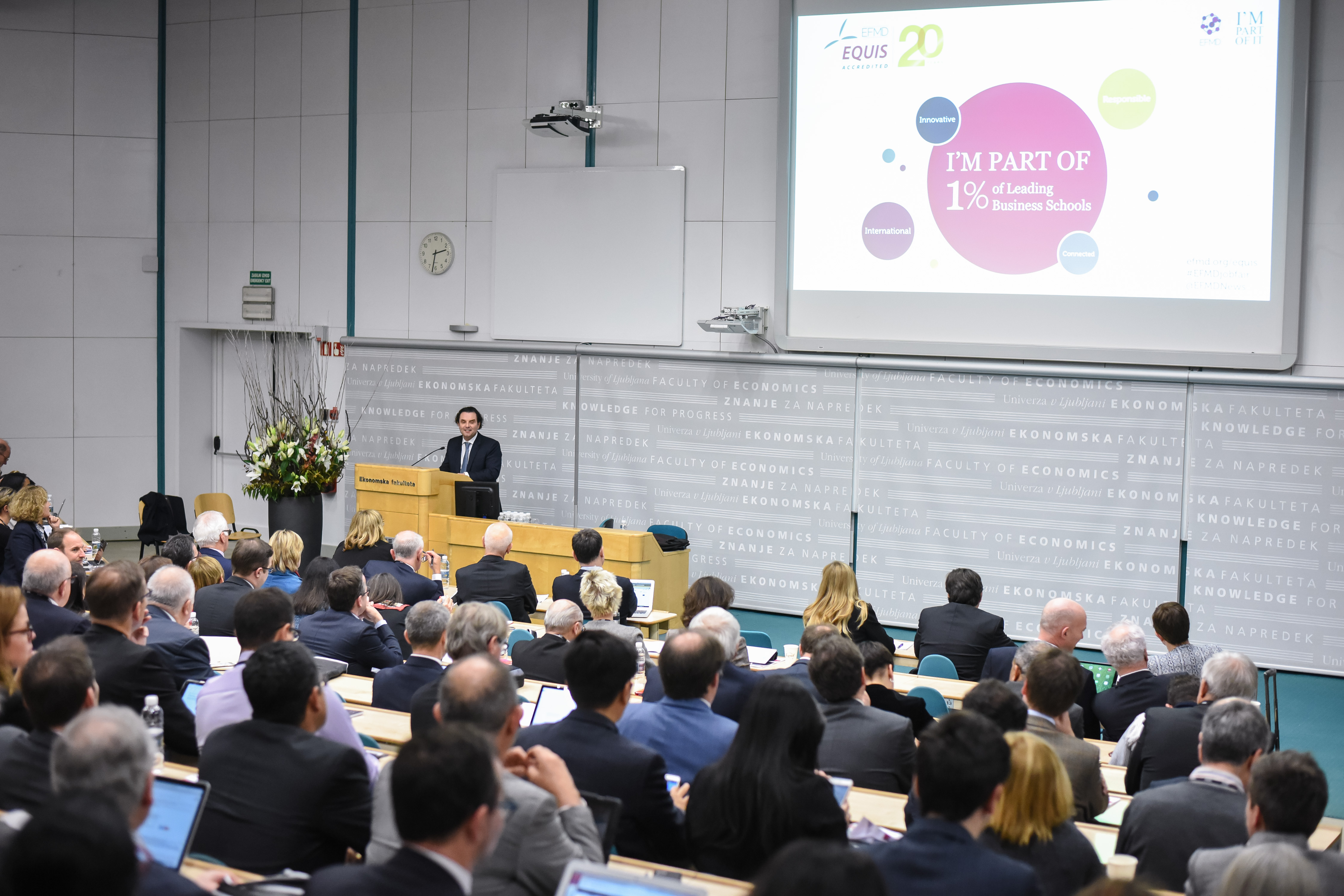
The two-day conference at the Faculty of Economics, University of Ljubljana, which was attended by over 300 deans of business schools from all around the world, ended on Friday, 3 February 2017. The speakers delved into climate change and why they thought it should dictate future economic development.
Before the closing panel discussion, the guests of the Ljubljana-based Faculty of Economics were addressed by Violeta Bulc, the European Commissioner for Transport, who presented a few key challenges the EU has been confronted with over the past two years. In her words, the economic crisis has created serious consequences for European society, which continue to reverberate. We are the largest economy in the world but must be aware that further growth is best fuelled by co-operation, not competition. The aftermath of the economic crisis poses another challenge, namely the migration crisis which caught the EU unprepared, the Commissioner said. “Europe has never been a continent that would inspire in others hope for a better life, but now our economy is much desired”, she added. “I won’t say we have done our homework in this area, but we have developed tools that are helping us respond to this huge challenge”, she emphasised. The third, daunting and unprecedented challenge facing the EU is terrorism. As Bulc explained, the member states lacked a good information exchange system but the EU swiftly resolved this. We cannot say we have done everything to prevent this situation from reoccurring, but now we have better systems and equipment, enabling constant progress, she added. This challenge had still not been dealt with when Brexit was announced. In the Commissioner’s opinion, it revealed the EU’s weaknesses, forcing the countries to focus on the fundamental reason for having created the Union, namely peace. The guiding principle was to prevent war from repeating on European ground, she pointed out. She also touched on Donald Trump’s election as US President as a turning point in American politics, thus posing another challenge for the EU.
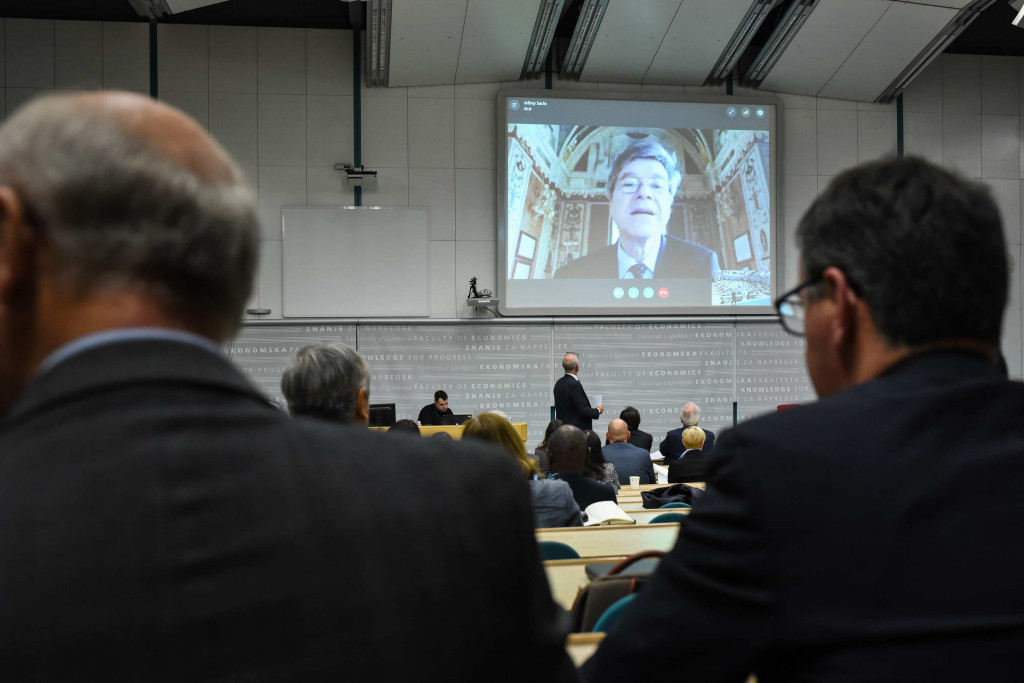
Through a video-conference the attendees were also addressed by Jeffrey Sachs, special advisor to former UN Secretary General Ban Ki Moon for sustainable development goals. He noted that the world has become increasingly unstable which is why economic development should be geared to fairness and environmental sustainability. His emphasis was on countries’ obligation to follow the rules they agreed to in the Paris Agreement. A dangerous and outstanding issue, in his opinion, is the future of US politics. He pondered on the possibility of Trump bringing other countries together with his policy. “If we lose another generation in coping with the threats of climate change, we will no longer be safe”, he warned.
His stance was met with the approval of Geoffrey Lipman, the former leading man of the International Air Transport Association (IATA) and founder of the Greengrowth.travel organisation. He also described climate change as a major global challenge. He said that many business schools still failed to shape the mind-set of staff to seek opportunities in green incentives and create new, green jobs. “Climate change is about our survival; if we don’t fix this, the future generations will get fried or frozen” as Lipman put it explicitly.
A panel discussion closed the two-day international EFMD conference in Ljubljana, to be hosted next year by Munich. The Brussels-based EFMD is the biggest international foundation for management development, comprising nearly 900 institutional members from the academic and business communities in more than 86 countries. At the end, the EFMD members announced that a new office has been opened in Prague.
SOURCE: STA
Image gallery:










Publish your comment:
 Upcoming events


