“The Montenegrin national anthem moves me to the core, just like Slovenian one”
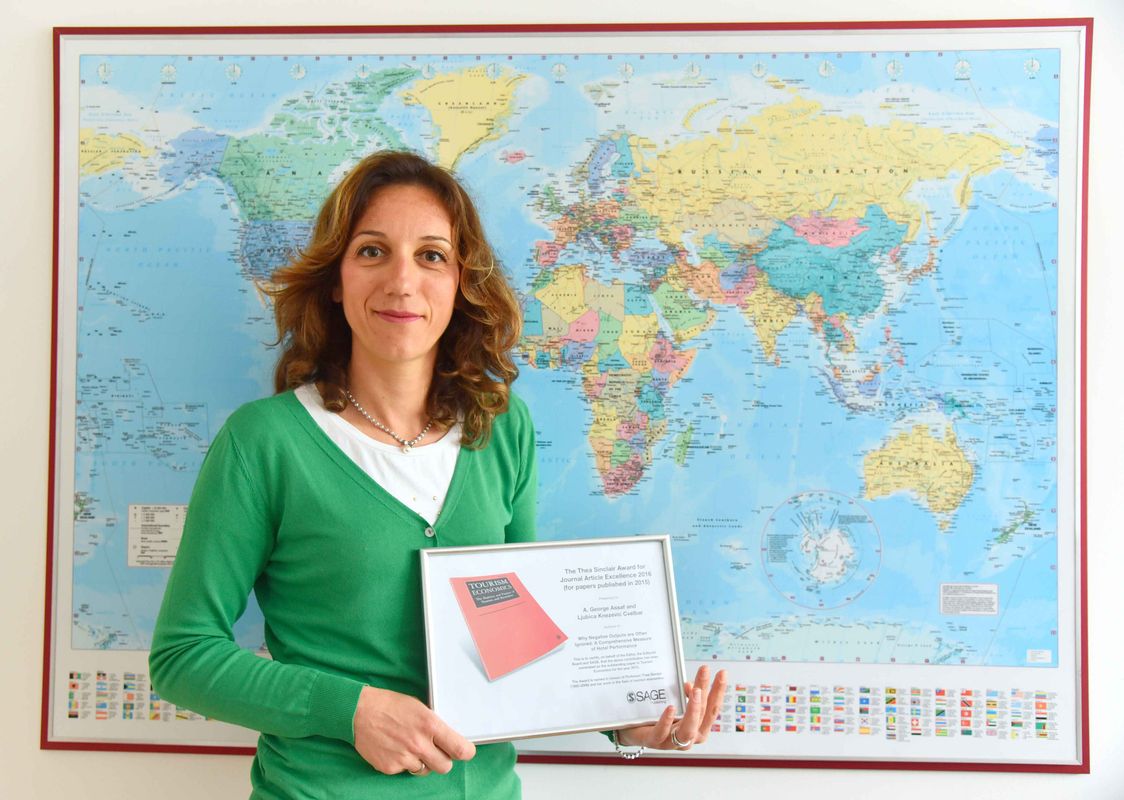
You are invited to read the following interview with our lecturer Prof. Dr. Ljubica Knežević Cvelbar
“The Montenegrin national anthem moves me to the core, just like Slovenian one”
How to persuade tourists to act in a manner friendly to the environment – this lies at the core of research conducted by the Slovenian scientist with Montenegrin origins, Dr Ljubica Knežević Cvelbar. This places the Faculty of Economics professor at the world’s peak.
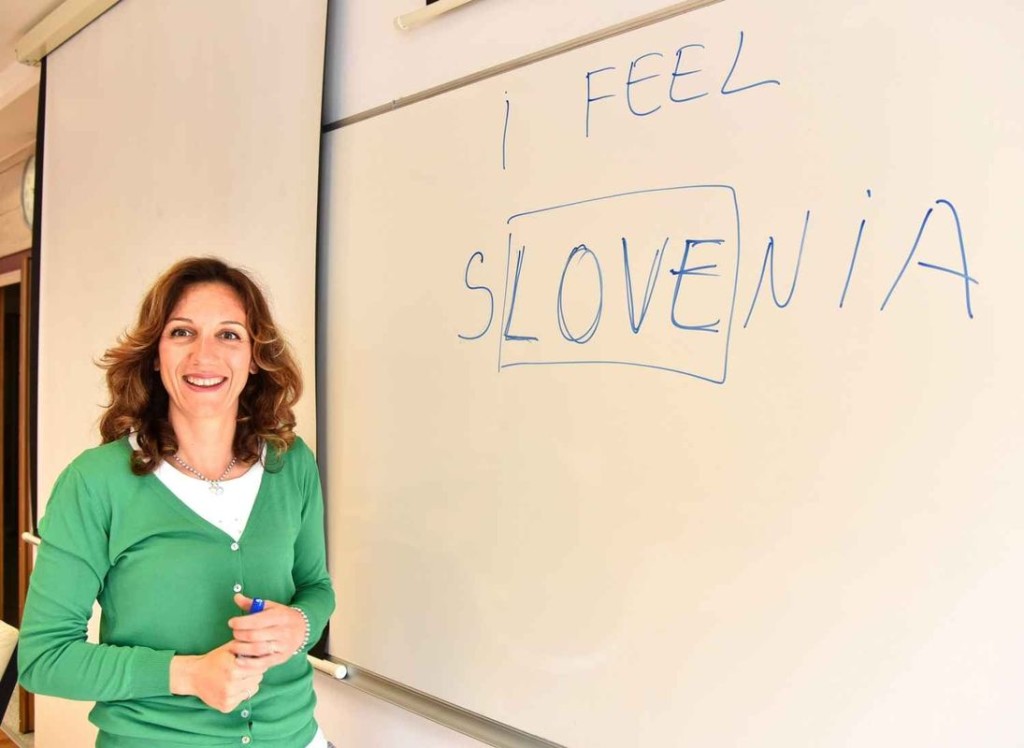
“One’s attitude to one’s national anthem is very emotional and, when you hear it, you feel part of something greater, of a nation. I feel lucky to be part of both Slovenia and Montenegro and to have two identities – Montenegrin and Slovenian”, said FELU lecturer, Dr Ljubica Knežević Cvelbar, during an appearance on the NaGlas! TV show.
In 2000, when she was a student of economics in Podgorica, she attended the FELU Summer School for foreign students in Ljubljana. “When the Summer School was over, Danijela Voljč, the Head of the FELU International Office, offered me a chance to return and enrol in master’s studies. I thought about it and accepted the offer as I knew that I wanted to pursue my studies. So I returned in September 2000 to IMB Radovljica, a master’s programme then led by Prof. Prašnikar”, Prof. Knežević Cvelbar recalls. After gaining her master’s degree, she started working at the Institute for South Eastern Europe where she completed her doctoral studies. And 18 years later, she is lecturing at the FELU to Slovenian and foreign students. Whereas the first Summer School in 2000 hosted 20 students from former Yugoslav countries, it is presently attended by 600 students from over 30 countries.
You first came to Slovenia in 2000 to attend the FELU Summer School. Why did you decide to stay?
I was just finishing my studies at the Faculty of Economics in Podgorica and I was given an opportunity to attend a summer school in Ljubljana. The only thing I knew at the time was that I wanted to continue with my studies. So it was a logical decision to stay and take up master’s studies which, at that time, were led by Prof. Prašnikar, while the Summer School was led by Danijela Voljč. They both made enormous efforts to ensure many foreign students could come to Slovenia. And then I stayed, of course.
You are one of the leading experts on the economics of tourism – last year, you were awarded for making the best contribution to the field of the economics of tourism. How did you manage to achieve this?
In the academic world, one must be curious, persistent and hardworking – that is how I succeeded. The same as in sports – you must be good at the international level, you need to work hard and be successful at it.
To simplify a little: you mainly deal with how to persuade tourists to be as friendly to the environment as possible. Why is this important?
Environmental sustainability is the greatest challenge facing humankind today. Tourism is an extremely invasive industry for the environment and the fourth biggest polluter. It produces 8% of all CO2 emissions and tourists basically consume more sources than local people. They consume 3 times more water, 2 times more electricity and produce 2- to 4-times more waste. We are conducting experimental studies in a natural environment, namely a hotel which is at the same time our laboratory. For example, we have worked a lot with the Eko Hotel in Bohinj. And then we provide different incentives or tourists. One such incentive offered hotel guests a free drink if they decided not to have their room cleaned: 40% of Eko Hotel’s guests in Bohinj then declined the cleaning of their room and took the drink. One room cleaning requires 35 l of water, some energy and 100 ml of cleaning agents. Every day, a million hotel rooms are cleaned all around the world.
Do Slovenians have a different attitude to nature from Montenegrins?
Yes, for sure. The attraction to nature is very strong in the Slovenian identity. Slovenians respect nature and cohabit alongside it, whereas in Montenegro people feel a strong pride for tradition and history. Basically, the Slovenians and Montenegrins have different attitudes to the environment.
Does the Montenegrin national anthem still move you?
Of course, to the very core. As does the Slovenian one. One’s attitude to one’s national anthem is very emotional and, when you hear it, you feel part of something greater, of a nation. I feel lucky to be part of both Slovenia and Montenegro and to have two identities – Montenegrin and Slovenian.
Do you also nurture a dual identity in your family? How do you talk to your children and husband?
In Slovenia, we speak Slovenian and when we are abroad also English. But when we are in Montenegro, we all speak Montenegrin.
You foster business contacts with Montenegro as well, as you lecture there. You have also participated in preparing strategic documents to develop Montenegro’s tourism…
I try, as much as time allows, to also return to the society I grew up in. In recent times, I have been working a lot on motivating young people and imparting knowledge as a value to them – because knowledge is what moves a society forward. And I think there is not enough of it. When I am in Montenegro, I try to work the most in this area.
You also helped with the Lipske pećine project. What is this project all about?
It’s about valorising a national asset, namely a cave in Montenegro that had not been open to the public before but, with the help of different stakeholders, we opened it three years ago. Last year, over 25,000 people visited it. We are very proud of this.
Are there any examples in Slovenia that can be transposed to Montenegro, or the other way round?
There are ideas that can be transposed, but each would have to be adjusted because it functions differently in different environments.
Montenegro was the first to declare itself an ‘Ecological State’ in 1992. Does this help raise awareness and develop tourism?
That was a political decision at the time, although it has not contributed to the development of tourism as such. Then Montenegro chose another path and is now promoting its Wild Beauty.
What are your next challenges? Will you go to Australia? Namely, last year you were given an award for the best contribution in the field of the economics of tourism in global terms. You also received prestigious financing from the Australian University of Queensland that is allocated to leading international researchers.
Yes, probably already in October. We have exceptionally good research connections there. We will continue to conduct studies about how to persuade people to behave more environmentally friendly in the hedonistic context of tourism. Moreover, we cooperate a lot with the Faculty of Computer and Information Science; namely, we are looking for new ways to use technology for these purposes. We are also encouraging tourists not to visit overcrowded destinations but places that have yet to be explored.
Dr Ljubica Knežević Cvelbar has given lectures at 33 universities all over the world and, last year, her scientific article was declared the best in the field of the economics of tourism on a global scale. Moreover, she also received prestigious financing from the Australian University of Queensland, intended for the leading researchers from abroad. She has raised a family in Slovenia, but has not forgotten Montenegro. She regularly visits it and occasionally delivers lectures there. She also participated in preparing various strategic documents to develop Montenegrin tourism.
SOURCE: RTVSLO
Journalist: Saša Banjanac Lubej, naglas@rtvslo.si
Image gallery:
Publish your comment:
 Upcoming events


