Interview with Eric Cornuel
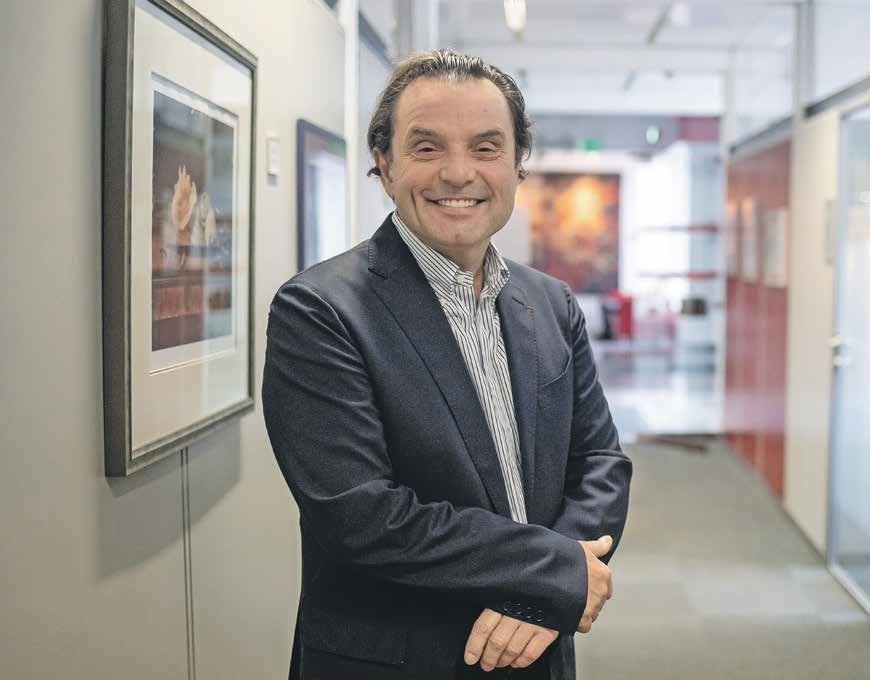
A good business school should not be inward-looking, but above all an institution, responsive to the needs of society and oriented towards ethics, responsibility and sustainability, says Eric Cornuel, Professor of Business and the CEO of the European Foundation for Management Development (EFMD). A few years ago, he also granted accreditation to the School of Economics and Business in Ljubljana as an acknowledgement of high quality.
Professor, you are the CEO of the EFMD, the world-renowned European Foundation for Management Development, which accredits and monitors the quality of business schools and universities around the world. Let us start with an elementary question. How and by what do you identify quality institutions? What are the main characteristics of good business schools in 2023?
A good business school must play a real role in society. Indeed, in recent years, we have seen a trend of globalisation and then, to some extent, deglobalisation in the COVID-19 period. Above all, a business school must live in its own time. It cannot be like a fortified castle where people only communicate with each other and nothing more than that, but must spread its knowledge throughout the world. For us, a good business school is first and foremost an institution that responds to the needs of society. And if you want to respond to the needs of society, you first have to be in touch with the world, you must have very strong links with society, with the business sector, with public administration and with different communities. We are not a castle surrounded by a wall, as I have already said.
So you need to be open …
…exactly like that. We must be open, that is very important. The other very important thing is, of course, internationalisation. I do not know of any country that can live on its own. Just look at big China, the biggest country in the world – what would happen to it, if it did not export. That is why we must have institutions that advocate internationalisation and help us understand the collective dynamics, the differences in cultures, skills, the way we talk, the way we motivate people from other cultural backgrounds. And how we find ways to engage them seamlessly so as to work and do business with them. This is important because if people do not know and understand other cultures, this can lead to xenophobia, racism and other undesirable phenomena. For us, a good institution must show such a character. But we are also academic institutions, so we must also produce knowledge and do high-quality research. All this can manifest itself externally in very different ways.
How for example?
Some institutions initially decided for highly academic research, but are now moving step by step towards research with a more heuristic dimension. I am referring to research that brings direct benefits to society and to the management of organisations. This is something we have not often done in the past. One very important thing is the orientation towards the so-called ERS (ethics, responsibility, sustainability). So an excellent business school that gets our accreditation must have a focus on ethics, responsibility and sustainability. And this must feature in its operations and, of course, in the knowledge it disseminates to students and other stakeholders.
You also granted your EQUIS accreditation to the School of Economics and Business of the University of Ljubljana some time ago. What were the reasons for giving it this recognition? And how do you see its development?
The EQUIS (i.e. EFMD Quality Improvement System) is without a doubt the most selective accreditation in the world, all the data and statistics show that. Let’s look back to the time after the fall of the Berlin Wall and Slovenia’s independence. On the one hand, with two million inhabitants, you are not a very big country…
…of course, that’s about the size of a suburb in Paris…
…true. But you have a strong academic tradition, which is at the heart of your system. I remember the first time I visited this school, it was a very long time ago. And since then there have been a number of deans: Maks Tajnikar, for example, and of course my very good friend Dušan Mramor and others. All these people had a vision. They said: We want to become a centre of excellence for the country and for the region, and later even more broadly, on a global level. They have done a lot to establish this organisation internationally. They have also demonstrated the positive impact of the School of Economics and Business but also of the University of Ljubljana itself, on Slovenian society, the region, as well as globally. They have been very successful in enforcing the standards contained in our accreditation.
The current Dean, Metka Tekavčič, continues to reaffirm these principles. The school has now been fully accredited for several years and is proving that it is a very, very good institution. I am very proud of that, because I remember the time when I first came here. The premises, the research activity – everything was still in its infancy. They have been able to create a fantastic institution. At the beginning, let’s say at the turn of the millennium, there was only one recognised business school in this region, the Kozminski University in Poland.
We are talking about the school founded in Warsaw by a great visionary, Professor Andrzej Kozminski, with whom I had a very interesting interview a few years ago, also for Delo. He was one of the pioneers in terms of managers’ education.
Exactly. He is a good friend of mine, a wonderful man and a great entrepreneur, and he built this university in the 1990s and was the first to get this accreditation. Then others came along, first of all Ljubljana, with really very impressive results. If we just consider the size of the country, this is really admirable.
The School of Economics and Business in Ljubljana is also known in this country as a human resource incubator. It is the place where many later managers, academic economists, consultants, ministers, central bankers, diplomats, politicians, civil servants, journalists, etc. studied. In short, these are people who have a social impact. On the other hand, there have also been a large number of foreign students for many years.
Yes, it is like a snowball effect. Once you get the EQUIS accreditation, you are one of the top 200 schools in the world and you start to exchange students. On top of that, this school has passed our BSIS (Business School Impact System) test,
where it also scored very well. Here you can see the importance of the University and the School of Economics and Business in both the country and the region. When so many managers, politicians, senior civil servants, academic economists come out of it, it makes a huge contribution to the economic and social development of Slovenia. We are very happy and proud to have this school close to us.
We have heard many compliments. But where, in what areas, are the challenges for business schools to become even better, more responsive, more connected to the environment?
Perfection is not of this world, all schools in the world can be better, but most things have already been achieved, the level of excellence is already very high. Of course, if you can attract even more international students, if you can conclude even more agreements with business schools from abroad, say from Asia, Australia, America, that makes the internationalisation of the institution even stronger. All the actions related to the personal development of students and to sustainability are already at a very high level, but you can always do more. You can also do more to help the authorities
of this country to improve the welfare of Slovenian citizens.
You mention sustainability. The environmental, social and governance (ESG) standards have been very prominent for some time now, and all self-respecting institutions, organisations, companies, etc. put them at the forefront of their activities in one way or another. They are somewhat the “name of the game”, just as the “information society” was over two decades ago. But what are the new trends in this area?
Of course, there are many elements and challenges that we are facing. Let’s look at the Covid era, for example, which was quite difficult and had both good and bad consequences. As institutions, we have turned things around very quickly. We have adapted our learning and knowledge dissemination to remote working. We have learnt a lot about how to adapt our learning methods. And now that we are moving back and we are all back in schools, I hope that we will not lose everything we have learnt and gained during that period. I hope this situation will not happen again, but I would like us to learn from the experience. I believe that, in the future, the so-called blended learning will become more and more common. I am talking about a combination of remote access and face-to-face encounters.
What specifically do you have in mind?
Let me illustrate with a simple example. Let’s say in Slovenia, as a small country, but also in the region, you do not have a large number of faculties and business schools; you have Maribor and other schools. All these schools teach accounting, marketing, etc. at entry level. Every year, dozens of professors and thousands of students sit in lecture rooms and learn the basics. Do you think we really need 20 faculties teaching the same initial lessons with different professors? Not necessarily. Perhaps we could create new cooperation, new agreements between institutions. Let’s say, maybe we could agree that a school in Maribor takes over Accounting 1.1, Ljubljana takes over Marketing 1.1, Zagreb takes over Finance 1.1, etc. Then this part of the lectures could be delivered online, with sophisticated tools, student assessment and of course at the end with an exam. In this way, we could save a lot of resources as far as the professors are concerned. These resources and professors could be used to give more sophisticated lectures to the same students, and the professors would have much more time to do this. They could work with students in smaller groups and give them more sophisticated and complex knowledge. For example, accounting can be quite complex. If we worked in smaller groups, it would be easier to find out what is wrong with, say, a balance sheet. Professors would then be able to explain complex topics to students more easily and in more depth. This could increase the added value of what we “produce” in business schools. In short, the basics could be taught at a distance, and when students get together, they could have very high quality and in-depth meetings and case studies in groups. And I would also like to mention research. It is not sufficiently connected with the needs of society.
Why? What are you aiming at?
I am thinking of the very hermetic academic research, which is often read by only a handful of people within the academic community. And, frankly, we have very few concrete applications for the management of organisations and societies. That is the problem. We cannot be disconnected from society. Economists have estimated that the production of this type of contributions can cost up to half a million dollars. And what is the return on investment for society itself? I do not think we should throw highly academic research in the dustbin, but I do think we should direct resources towards research that has a heuristic dimension. That is, research that serves the objectives of organisations and societies and is connected to communities and the needs of organisations – not articles that are just read in a small community of people. I am referring to the articles that nobody reads, except for a small group of professors who are interested. Otherwise, we run the risk of going into very sophisticated economics that uses some models but, at the end of the day, explains nothing. The result is that you lose students. That is what happens when you are not relevant to the needs of society, and we need to stay in touch with them and take them into account.
Of course. So what are the main challenges for international management and business schools in an era of deglobalisation, geopolitical tensions, war in Europe, high inflation, falling purchasing power and other disruptive forces affecting societies and individuals?
That is a lot of things. Anyone who could answer that question would deserve a Nobel Prize (laughs).
It is a descent from the heights of academia to the real needs of societies and people.
Of course, I agree. Business has been an element of peace, economic growth and cooperation between people and nations over the last 20 or 30 years. Insufficient cooperation, ignorance and lack of mobility have created tensions and even wars. The more integrated we are, the more we understand each other’s culture and mentality, the more interconnected we are, the fewer risks we face.
The role of business schools, as forces working for a greater good, is to maintain connections between cultures, foster mobility of participants as well as create stronger cooperation between companies and individuals. So that we can work together for a better world. Of course, this sounds a bit utopian, but I believe that through business we can manage difficult situations better and more easily than if we are separated from each other. And I would not limit myself here to higher education.
Why?
I think secondary and even primary education is at least as important. For example, we talk a lot about ethics. I am not sure that lectures on ethics can make any difference to people who are 25 or 30 years old. Ethics belongs already in primary school. That is why we need to invest a lot in primary education. Teachers at this level are poorly paid and not valued in many countries. That is a huge mistake. It should be the other way round, so that there is a change in mentality. Otherwise, I think that students should move and spend a few semesters abroad, from primary school to university. To understand different societies and different economic systems.
Sometimes they should go to countries where the standard of living is higher or lower, in order to gain experience, enrich themselves as persons, gain cultural background and strengthen their human consciousness. It is humanity that is lacking in this world. We see the war in Ukraine, people are dying, and we are slowly getting used to it, step by step. This is terrible. There have been major crises in the past, terrorist attacks, which we have now completely forgotten. That is why we should create systems where we are closer to each other, so that humanity can prevail. This is not about left or right, about any ideological dimension. After COVID-19, there was deglobalisation, and a united Europe is a very important project for me here. Only idiotic, stupid people think that they can be stronger on their own, so they should at least think twice before they do anything rash.
We see what has happened in the UK after Brexit, what political, economic and social problems they have…
That is a perfect example, and they are only at the beginning of big problems there, and they are going to go further and further down. I am sure that they will return to the EU, but that is just my personal opinion. In Europe, we now have a tremendous opportunity to become the only part of the world with a very high per capita income, very high social protection and, at the same time, to have peace. Of course, terrible things are happening in Ukraine, but there is peace elsewhere. I do not know of any other country in the world that has all three of these elements. Look at the United States, which, of course, has a very high income and also peace, but its social dimension is terribly poor. The life expectancy of US citizens has fallen by 30 months in the last four years, by two and a half years. Of course, this is also due to COVID-19, but drugs are also killing people. And guns, which kill 40,000 people a year there. The average American dies sooner than the average Cuban or Albanian. In Europe, therefore, we need to value our social model more and strengthen our ties to improve it further.
Let us also look at the rapid, unprecedented growth of artificial intelligence. In this light, what are the new challenges for business schools and also for managers? What is the importance of learning in the chatgpt era?
It is funny to watch these chatgpt tutorials and people who are completely obsessed with them. I am not saying that we don’t have a problem with AI. Of course, there are ethical and philosophical challenges behind it and we have to face them. Chatgpt can also be used in a positive way. For some parts of education, we can use it to write bachelor’s or master’s theses
and things like that. Instead of banning it or being afraid of it, we can and should use it in the learning process. Also by detecting possible errors in what it writes down. The wonderful thing about this is that human intelligence is an added value, because if everything is going to be automated, we have to ask ourselves what kind of world we want to live in. In education programmes for managers, we do a lot of work with case studies. And chatgpt is not useful for that. When you have documents in front of you about the business of a company and you explain the dilemmas that a manager has to take into account, chatgpt will not be able to tell you what to do, its answers will not be relevant. It is therefore less useful in our discipline. At the same time, chatgpt can be a wonderful tool that can speed up many processes. And of course, it should be treated as a servant, not as a master.
Can you give an example?
To draw a parallel with academia: imagine you are an oncologist, say a brain tumour specialist, a surgeon. You know that there are a few dozen different brain tumours and that every year 400 or 500 new publications are published on the subject. You, of course, as a professor and an oncologist, do not have time to read all these 500 scientific papers. This is where artificial intelligence comes in, as it can analyse all these things and suggest potential tools that you can use in your specific cases. It can help you decide what treatment, what surgery you will use to save or prolong the lives of your patients. This is where artificial intelligence is wonderful and helpful, because it can save a lot of lives and a lot of time.
Going one step further, what are the most important skills for successful managers now?
We are now in the fourth industrial revolution, but I don’t think the qualities are that different from 20 or 30 years ago. People have not changed so much that they need different kinds of skills. Of course, as a manager you need a solid quantitative knowledge, but qualitative skills are even more important. This means thinking strategically, being able to draw critical conclusions and think critically. It is important to create team dynamics, to be able to integrate into different cultures, to be able to make compromises. And, of course, I am a very strong advocate of being able to forgive mistakes. In the past, the American way of thinking was that if you make a mistake, you are immediately fired.
So it is empathy for others, for colleagues, that is important?
Exactly. It is a fundamental thing. Because if you want to bring people together and unite them for a common goal, you have to have a very high level of trust. And you gain trust also by forgiving mistakes. Only people who do nothing never make mistakes. As you said, we live in a world where there is a great deal of uncertainty. People are increasingly disoriented, they may have problems in their private or family life, companies are in trouble. That is why people need points of support, pillars. Organisations can potentially give them that, because they can create a psychosocial environment within companies. And if these provide peace and stability for employees, you can get the best out of them, rather than squeezing them like lemons or putting them under strict control. If you give them freedom and trust them, they will perform much better. I am absolutely convinced of that. It may not be possible in all companies, but it is important to give people the opportunity to develop their potential at all levels.
You showed your entrepreneurial spirit at a very young age when you set up a hydroelectric power plant in France as a student. Since then, you have been working with young people for years, both as a professor and as the CEO of the EFMD. How do you see young people and their entrepreneurial spirit and drive? What characterises them as the business leaders of the future?
These new generations are very different. Some say that young people are not as friendly and polite as they used to be. This is a complete fallacy. I think the new generations are wonderful. They know what they want. You can’t just feed them a line. They want a life that also brings them something personal; maybe they are a little less interested in money. But we must not forget that their life is harder than ours was. I would point here to unemployment, insecurity and the problems of the precariat. Life is more tense, there is more stress. And, as you know, the WHO has labelled stress the disease of the 21st century. Stress levels are higher in the younger generations, and they are highest in millennials. Stress is linked to hypertension, obesity, cardiovascular diseases, etc. The general economic and social trend shows that they may not have the same conditions as previous generations did. In this way, the social contract is partly broken. If you look at the past two or three decades, each successive generation has always lived better than the previous one. But now that is no longer the case. This is something that we have to deal with. Young people now are wonderful, they know what they want. On the other hand, they are more mature, because they are facing more problems. That is not necessarily a good thing, but I would like the situation to be such that they could be more naïve, more earnest. But they are grown up now earlier than we were.
This is also a consequence of the precarisation of work you have mentioned.
We are very attentive to precarisation. Branko Milanović [Serbian-American economist, professor at New York University and social inequality scholar] also points this out with his elephant curve. If you look at developments, the middle class is growing in developing countries, but in developed economies, it is shrinking. There are changes in the world and we have to be careful. In the past we had a proletariat that lived a difficult life, but for the most part it had relatively secure jobs. Now people are earning less money and have precarious jobs. This is a very important issue that we need to address. And institutions such as business schools have a role to play here.
They are educating the business leaders and decision-makers of the future.
Exactly, I agree. Let us try to make things better.
Eric Cornuel is a French economist, who holds a PhD in management from the Paris Dauphine University and is a long-standing professor at the École des hautes études commerciales de Paris (HEC), one of the world’s most prestigious business schools. He was also Director of the Central and Eastern Europe Institute at HEC in the late 1990s. He has directed and taught at several business schools in Europe and Asia. Since 2000, he has been the CEO of the European Foundation for Management Development (EFMD), based in Brussels, which accredits business schools around the world on the basis of highly demanding criteria. Among others, the School of Economics and Business of the University of Ljubljana was awarded the accreditation a few years ago. He is also the author of several scientific articles and globally acclaimed works in the fields of management education and the role and management of business schools. He has received several awards for his work, including the Legion of Honour, France’s highest civilian decoration, and the prestigious Magnolia Prize awarded by the City of Shanghai. He sits on boards of directors and advisory boards of several international organisations, including the China Europe International Business School (CEIBS), the Globally Responsible Leadership Initiative and the International Teachers Programme. He is also a member of the Brussels-based Bruegel think tank.
You can read the whole interview here.
Author: Miha Jenko
Photos: Črt Piksi
Image gallery:

Publish your comment:
 Upcoming events


