Research of the School of Economics and Business among UL’s most excellent research achievements
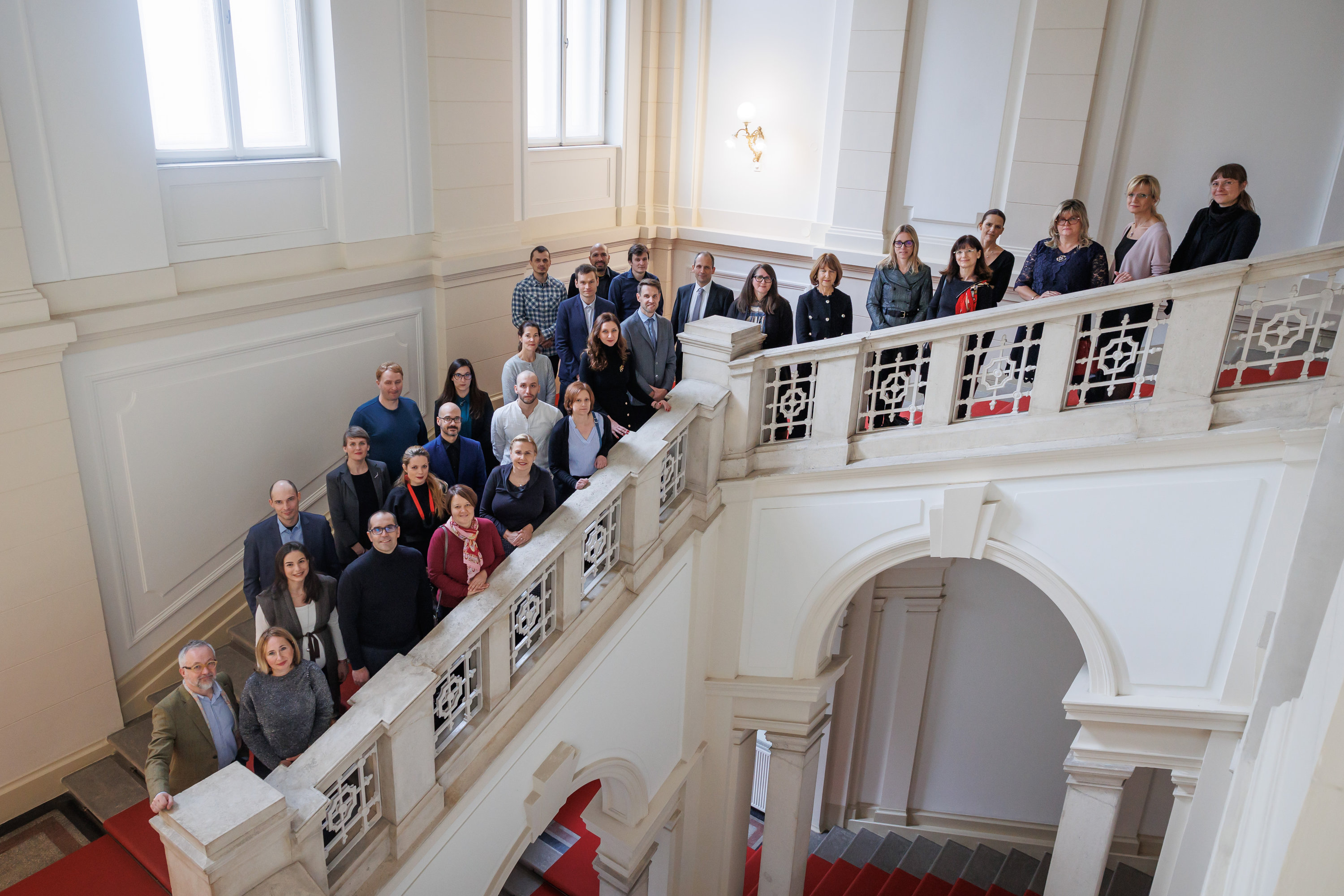
Every year, the University of Ljubljana (UL) announces the best research achievements of UL researchers as part of the University Week on the anniversary of its founding. The purpose of the event is to highlight the university’s focus on research and highlight those researchers who have achieved particularly visible results.
“It is science that has brought us to where we are, that has made it possible for us to live today’s leisurely lives, when we have forgotten the many afflictions that plagued our ancestors and with which they are still struggling in many places on our planet. Science has extended our lives, given us free time, good nutrition and much more. Unfortunately, scientific achievements have also indirectly led to the problems we face today, by which I mean mainly climate change, but the solution is not to go back to life in the pre-industrial age, but to find a solution to our existence on this the planet. This can only be done with science and trust in science, which the entire society, including politics, must be aware of,” said the rector of the University of Ljubljana, prof. dr. Gregor Majdič. The rector thanked the authors for their work and encouraged them to spread their knowledge beyond the academic boundaries.
When evaluating and finalizing the ten most excellent research achievements, the working group of the Commission for Research and Development took into account, above all, the international resonance, the comprehensiveness of the achievement, the topicality for the wider professional and general public, and the usefulness of use. All proposals are treated equally, regardless of science and regardless of whether the research is basic or directly applicable.
One of the research conducted at School of Economics and Business was recognised as one of the most excellent research achievements.
Authors: Ivana Jovović, prof. dr. Andreja Cirman, prof. dr. Nevenka Hrovatin, prof. dr. Jelena Zoric
The role of social capital and living-at-home lifestyle in energy-efficient home renovations
Most studies have identified a large potential for cost-effective energy savings in households, which can be achieved through energy-efficient renovations, appropriate selection of heating systems, energy-efficient behavior and other measures. Despite this, the potential for energy saving remains largely untapped, with the gap between optimal and actual consumption being referred to in the academic literature as the energy-efficiency gap. Here, in order to achieve the goal of a climate-neutral European Union by 2050, the established gap in the residential sector will have to be eliminated, which is a considerable challenge.
The research contributes to the literature on the energy efficiency gap by examining new determinants of household energy efficiency decision-making and behavior, namely social capital and lifestyle related to living in the home. The results of the research show that the socio-demographic and economic characteristics of the decision-makers, as well as the characteristics of the apartment and the location, are not sufficient to explain decisions about energy-efficient renovations carried out in Slovenian households. The findings of an econometric analysis using a retrospective panel data model show a positive impact of a home-related lifestyle, with energy-saving behavior and a tendency to maintain and repair the home on a “do-it-yourself” basis standing out. The positive influence of social capital is also confirmed, particularly the ease of agreement between residents and the established and functioning formal management of the building. In addition, the following factors emerged as important drivers of energy-efficient renovations: income, age of the respondent and housing, previous renovations, and availability of subsidies, while high regional temperatures and negative economic growth are barriers to energy-efficient renovations. The research findings thus point to the need for a mix of measures that would include education and information campaigns, subsidies for energy-efficient renovations, and measures that encourage better formal building management and community building. Implementation of these recommendations would improve decision-making and contribute to achieving the goals of energy efficiency and sustainable development in households.
Publish your comment:
 Upcoming events


