Effective energy policies for the future
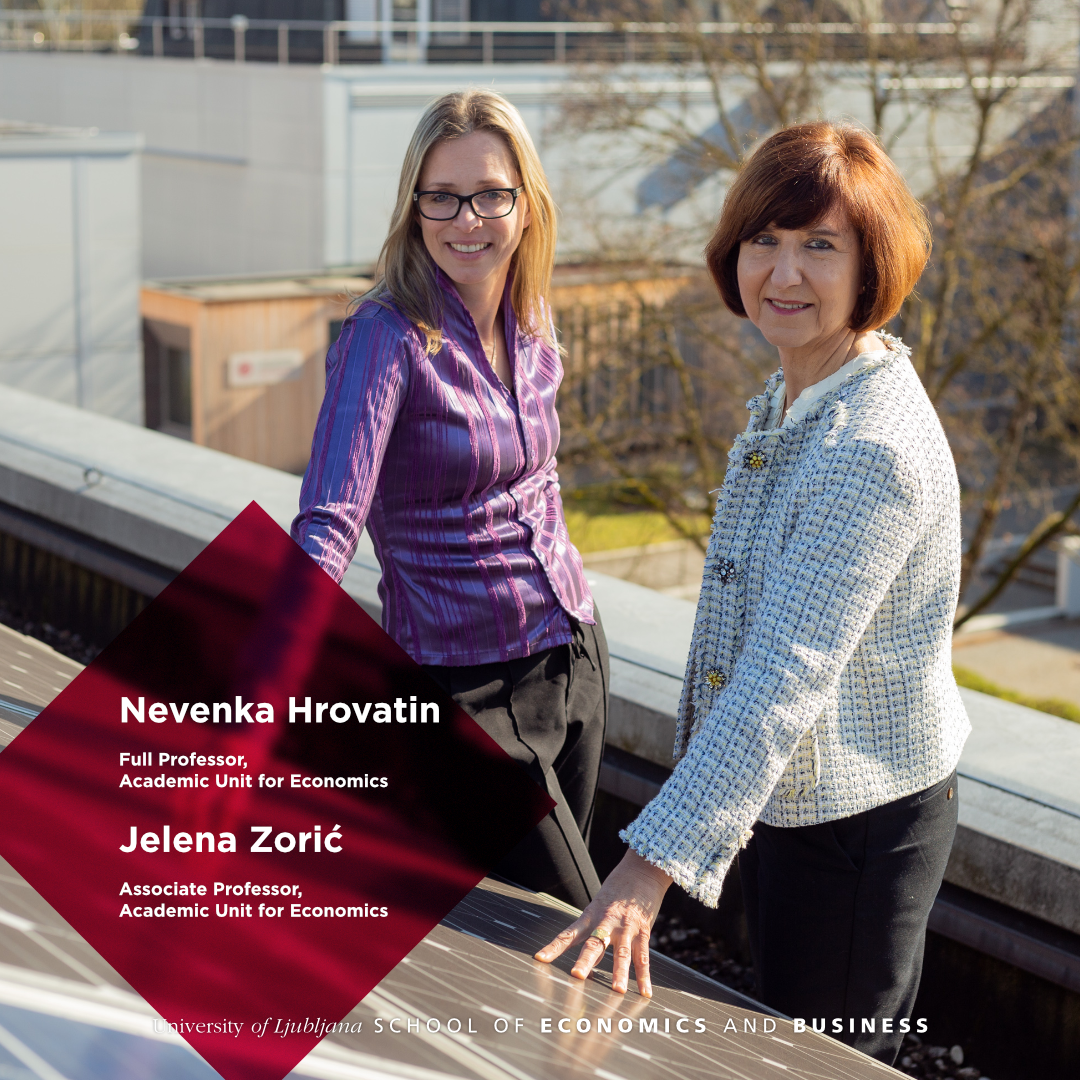
Nevenka Hrovatin, Full Professor, Academic Unit for Economics and Jelena Zorić, Associate Professor, Academic Unit for Economics
The focus of your research is on energy efficiency and energy policy instruments. How does your research contribute to sustainable behaviour and development?
Nevenka Hrovatin: The recently adopted EU Green Deal set an ambitious goal for the EU to become the first climate-neutral continent by 2050. This transition to a sustainable economy will require huge investments, cutting-edge research, and innovation. There is no doubt that the energy sector transformation needs to play a principal role in this transition. Energy efficiency in particular has been recognised as the first priority of the EU energy policy in the Energy Winter Package, as today there exist many cost-efficient solutions, but they have been insufficiently deployed in practice. Many studies focus on investigating this “energy efficiency gap,” which also inspired our research. In one of our papers, we addressed the barriers and drivers for implementing energy efficiency and clean technology investments of Slovenian manufacturing firms. Our findings suggest that industry differences in environmental regulation affect firms’ investment decisions, and that the energy efficiency gap is less likely to exist in large, export-oriented, and well-performing firms with a higher share of energy costs. This triggered our current research on the energy efficiency gap in the Slovenian SMEs as part of the EU-funded Care4Climate project. Professor Zorić has also been involved in the preparation of the National Energy and Climate Plan. We would also like to mention that the co-author of this paper, Dr. Nives Dolšak from the University of Washington, Seattle, USA is a distinguished researcher in environmental economics, and is also known for her work on the “tragedy of commons” with Nobel prize winner Elinor Ostrom.
Jelena Zorić: In our most recent research, we focus on energy efficient behaviours in households, and address the factors behind retrofit behaviours of Slovenian homeowners, available financial resources, and potential energy savings. We explore the different information sources that are found to be the major drivers of energy efficient retrofits. Professional advice plays more important role in an integral approach to energy-efficient retrofits, as opposed to partial retrofit measures. Our findings call for a policy mix consisting of retrofit subsidies, the redesign of the “EnSvet” public energy advisory network, which turned out to be insufficiently influential, and for the integration of different information channels and modern approaches for raising awareness and informing households. By revealing the energy efficient behaviour of households and firms, our research informs policy makers on the design of effective measures that would bridge the energy efficiency gap contributing to the EU sustainability goals.
Publish your comment:
 Upcoming events


