Interview with prof. dr. Maks Tajnikar
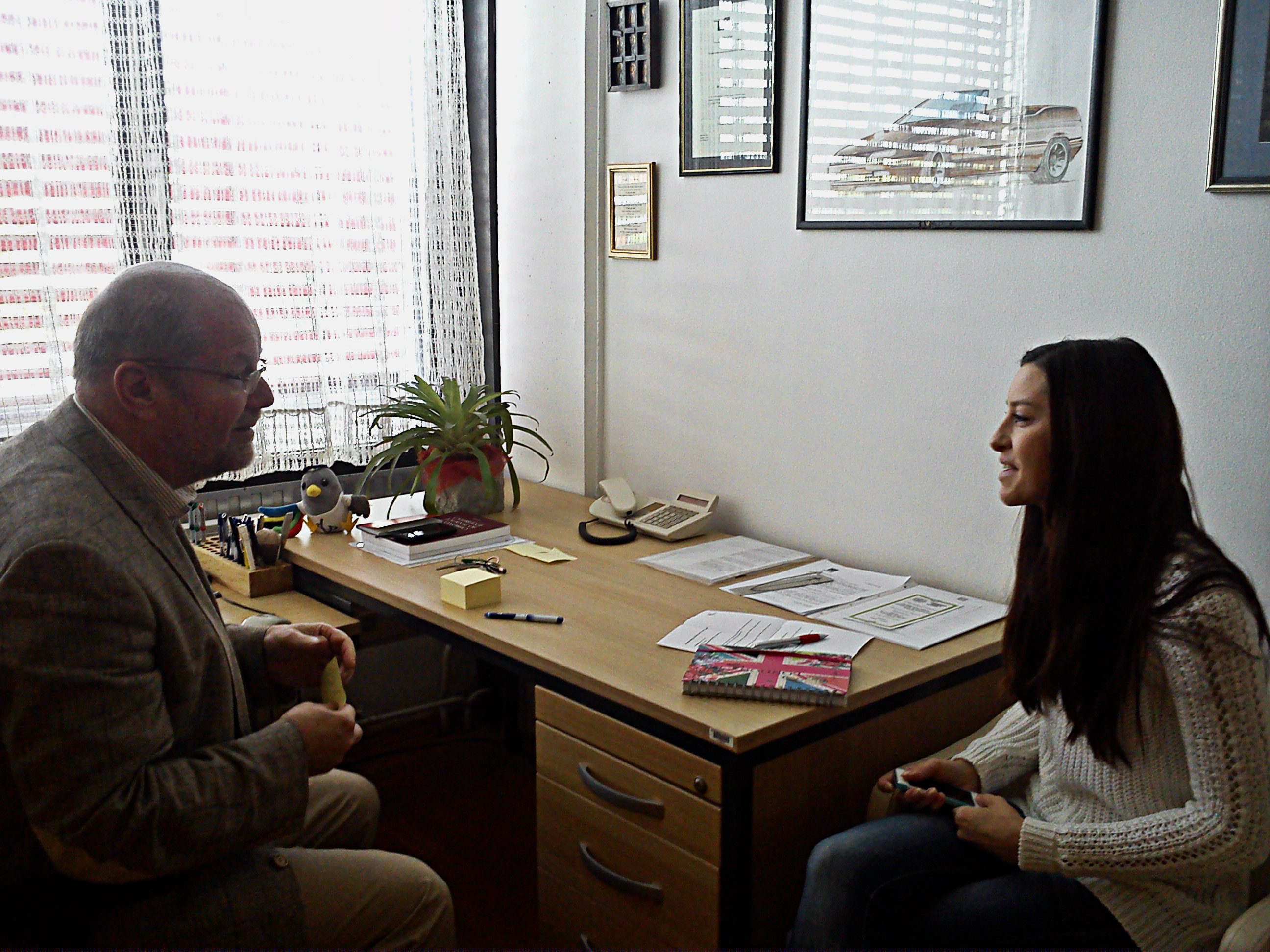
Are you familiar with the fact that in Slovenia we give 9% of our GDP to the health department and most likely we will give even more tomorrow? Do you realize how important and needed all those jobs in healthcare are where decisions about the management of those assets are made? Do you think that you need to combine your medical knowledge with the knowledge of economics and business? We talked to Prof. Dr. Maks Tajnikar who at the Faculty of Economics (EF) leads the postgraduate program in management and economics of health care.
1. Where do the beginnings of the program in management and economics of health care go back to? How did the idea of launching a program at EF occur, and what is its main purpose?
“The beginnings of the program go back to 7 years ago, when the assistant Dr. Petra Došenović Bonča and I were invited by Prof. Dr. Dušan Keber to take part in the development of the ‘Bele knjige – Zdravstvena reforma v Sloveniji’. Through this project, we ended up professionally in this area that hasn’t been dealt with yet at the Faculty of Economics in Slovenia. Also the European project helped, which brought together Hochschule Bremen, Manchester Metropolitan University, University of Budejovice and the Faculty of Health in Ljubljana. The program is international and it is currently carried out in our country and in Germany. Health economics is the application of microeconomics, and this is why it is also very interesting for me personally because I’ve been teaching microeconomics all my life.
The main idea of this program is to train people who will work in hospitals and health centers in the area of upper or middle management. The work should include everything associated with the management in health organizations in the private or public sector, in hospitals or health centers. In health care, you can’t be just a manager, but you have to understand how the whole health institution works.”
 2. Who are the lecturers in the program? Are there going to be any guest speakers who are already employed in this field of study?
“At the Faculty of Economics, there are several lecturers who are part of this program. Most work is carried out by Dr. Petra Došenovič Bonča, Dr. Adriana Rejc Buhovac, Dr. Nada Zupan, Dr. Sergeja Slapničar and Dr. Mirko Gradišar. Due to a large number of elective courses, this program hosts a lot of different lecturers from the Faculty of Health Sciences, Faculty of Medicine and Faculty of Pharmacy. Several times each year, the Faculty of Economics invites guest speakers, also from abroad, who are employed in health care to give lectures in order to help students understand theory in practice.”
3. How developed is this program internationally? Does it also host foreign professors? Does it also enroll foreign students?
” So far, 120 students have enrolled in this program, and 18 of them have already graduated. For now, we only enroll Slovenian students because this program is carried out only in the Slovenian language. However, the program does host foreign lecturers, so that the students are able to gain insight into health care in other countries and continents.”
4. What kind of students enroll in this program, and where can the students get employed after they graduate?
“Anyone can join this program, but it is payable because it is not a part of Bologna studies. There are no specific requirements to qualify for this program, only the ability to study. Therefore there is no specific profile of students. It is interesting that most of the students enrolled are students from other faculties, not economists. Many of them come from the Faculty of Health Care – nurses, engineers, doctors, pharmacists, chemists etc. After graduating from this program, the student is able to get employed as the director of a hospital, health center, assistant, manager of a health department, manager of the operating room etc.”
5. Which areas does the program cover, and what do the students learn from it?
“At the beginning, the program covers three basic subjects through which students gain basic knowledge for the study of management and economics in health care. These subjects are: economic health, management in health care and health systems and health care.
Students gain skills in the areas of finance, accounting, management skills etc. There are also elective courses, such as demography, ethics in medicine, personal partnership, and health insurance, in short, everything a person who wants to work in a health center, hospital, ministry of health, insurance company or any other health institution needs to know. After graduation, students are also able to plan business projects for health sectors.”
6. How could the theory of the current program be transferred to the Slovenian medical practice? What do you think the main problem of Slovenian health care is?
“Slovenian health care has a lot of problems. The first and most important thing is the so-called ‘universal health basket’, which should contain enough funds to meet health needs, but it doesn’t. The second problem is our health care network. This means, where the hospitals are going to be, and what type of contractors we are going to choose. The third problem concerns the entrepreneurial manner of management of the public sector. The boundary between the private and public sector must be very strict! Our students are very familiar with these problems. In addition, they receive all the knowledge of management, so they are able to do finances, accounting, marketing in health care, they learn how to work with public and private partnerships, basically they are trained to work in practice, because that is the focal point of this program.”
7. What are the good practices from abroad? Is there a specific country that Slovenia could set as an example of how a health sector should function?
“It would be hard to pick a particular country with good practice abroad. There are many good practices that more developed health systems are already using. An example of good practice is a hospital hotel. These are important for streamlining health care. Patients recovering from a surgery need a nursing home for better recovery. It covers all services, including nurses and visits from doctors. It also includes all treatments and therapies performed by nurses. We can find »five star hospital hotels« in Switzerland that can be cheaper than regular hospitals.”
Written by Petra Hrovat
Proofread by Živa Furlan

Image gallery:

Related news
Publish your comment:
 Upcoming events


