Conference on Ethics and Inclusive Work Environments: Each can receive codes, but carry out only a few.

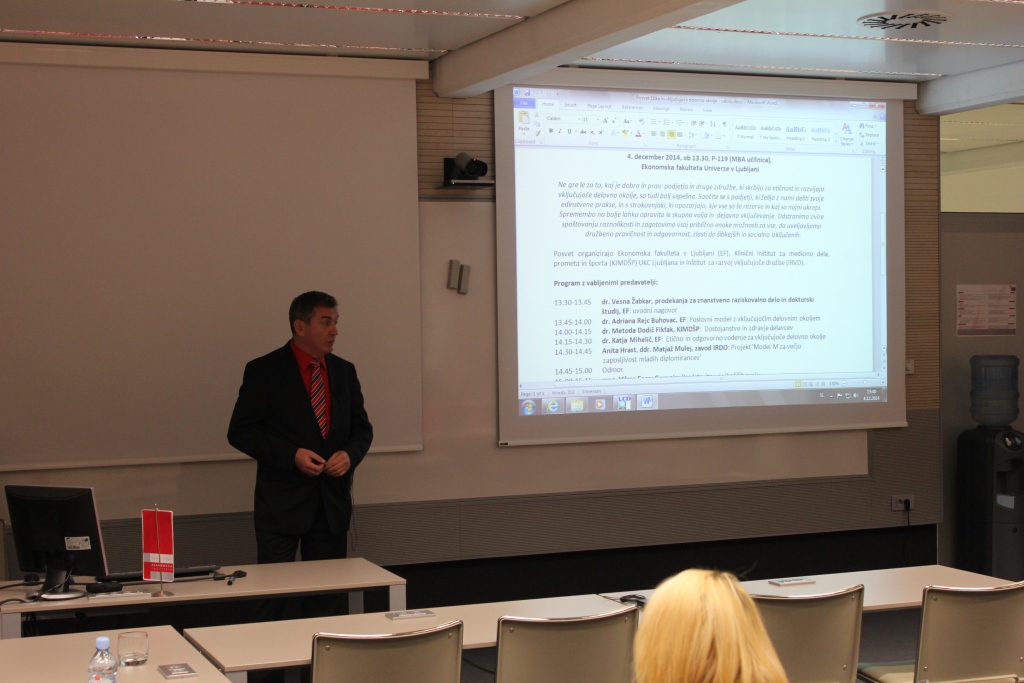
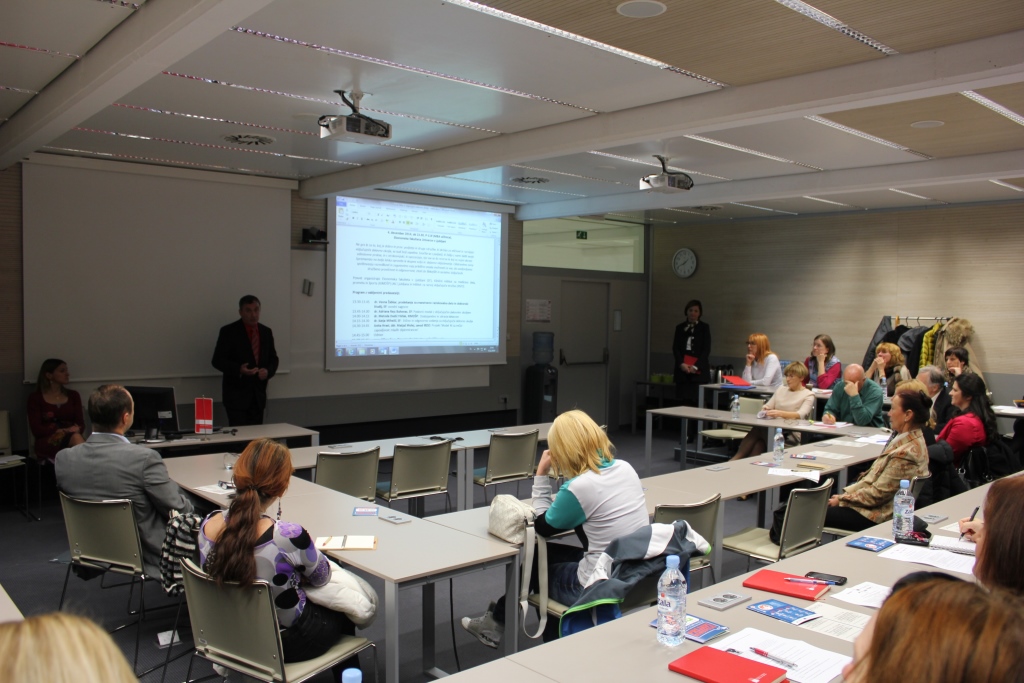
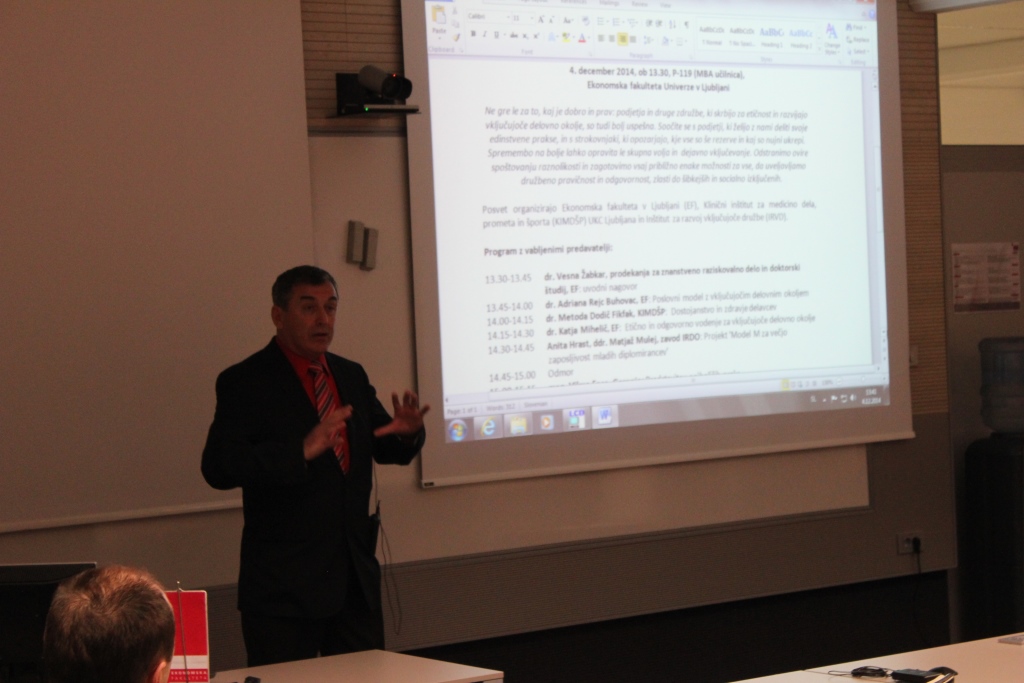
On December 4th 2014, the Faculty of Economics, Ljubljana University (FELU) organized a Conference on Ethics and inclusive work environments, in collaboration with the Institute for the Development of an Inclusive Society (IRVD) and the Clinical Institute of Work Medicine, Sports and Traffic (KIMDŠP). The event took place with the context of the Days of integrity, organized by the Integriteta Association – Transparency International Slovenia.
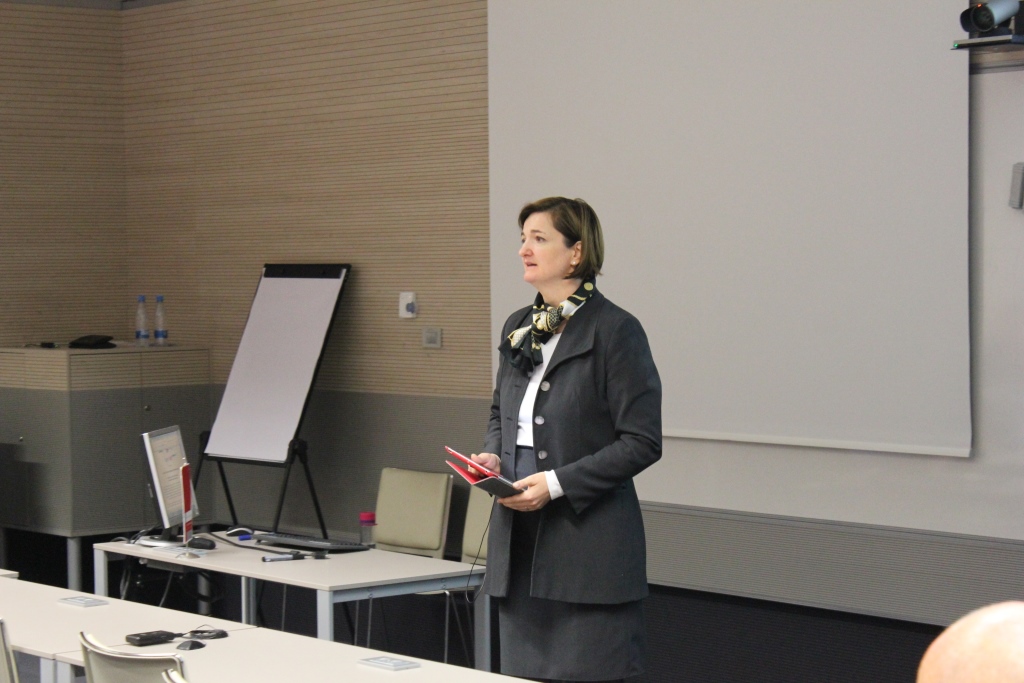
The event opened with an introductory speech by the FELU Vice-Dean, professor Vesna Žabkar. She pointed out the economic importance of motivated workers in an ethical environment, but that the only motivation of ‘Going the extra mile’ contributes to the sustainable development of the company where these people are employed. The conference was attended by many renowned experts, who presented their research and views on the topic.
Professor Adriana Rejc Buhovac (FELU): The business model of an inclusive working environment
“A study of 140 companies from all continents of the world showed us the real and measurable importance of ethics in the business environment.” She pointed out that in today’s world a more ethical business environment, encouraging engagement in employees, reducing the costs of any potential damages, lawsuits and penalties, we provide a good reputation for the company and raise the productivity of the company.
Method Dodič Fikfak, PhD., (KIMDŠP): Dignity and health of workers
The attendees were shocked by the appalling data and findings from surveys of workers who have lost their jobs or are employed in a company, which is going through reorganization. “The Slovenians are extremely depressed. […] Yes, I sit Slovenia responded more than 40% of all respondents. […] The restructuring of businesses leads to as much as three times worsen the health of employees in the company. […] If I speak specifically in the case of Mura kar143 laid-off people think of suicide, and half reported deteriorating health during the restructuring. […] In Slovenia is a rising trend of ‘mobbing’ and workers’ absenteeism. Such persons are not productive and harm to themselves and the company.”
Katja Mihelič, PhD., (FELU): Ethical and responsible leadership for inclusive work environment
Katja Mihelič, PhD., was unable to attend the conference, as she is currently abroad. She instead reached us via video conference. She pointed out that employees, especially young and newly-employed are heavily inspired by the leadership of the company. Therefore, it is important that for the performance of managers and board members to be ethical and moral, as they lead by example, which can be quickly extended through the whole enterprise, and can be a cancer in the long run that devours the company from within.
Matjaž Mulej, PhD., (Institute for the Development of Social Responsibility, Maribor – IRDO):
In his view, the problem of companies today is that workers are trained into becoming a tool and not as a person who then become solid members of a team. Project Model M 2014 upgrades project Model M 2013 with a 72% success rate. The programme provided the young unemployed participants with practical advices on developing their own goals, encouraged them to be more active, have respectful attitude towards one another, and presented them with methods of self-learning.
Anja Rupret (Transparency International Slovenia):
Slovenia is one of the top countries that adopt laws to prevent corruption and exploitation of workers, but its implementation is at a very low level. So called ‘whistle blowing’ helps to improve economic environment, so they tend to encourage individuals to report mistreatments. Organizations provide these people with consulting, protection, and legal assistance.
Bećir Kecanovic, MSc., (IRVD):
“The Slovenian working environment is very bad shape. A little known fact is the report of the Labour Inspectorate stating the cause of death of three workers, were caused by bad working environment.” He points out that the problem can be solved only through participation in solving problems by all of the employees and by doing so, it ensures that employees are more motivated and loyal to the company.
Successful practices were presented by the representatives from Gorenje and Domel. Both companies are successful and innovative with various certifications on performance and providing a good working environment. Both companies have adopted codes of ethics. Aleš Markelj from Domel pointed out that the codes can be adopted by almost anyone, but are carried out by only a few.
Both successful businesses are an example to the Slovenian companies, because only an ethical behaving and responsible business can succeed in the long term, which was the main theme of the conference.
Aleksander Koren, EFnews
Proofread by Leeanna Whirl, Efnews

Image gallery:






Related news
Publish your comment:
 Upcoming events


