Introduction to FDI Summit 2013 began with AmCham Business Breakfast on effective corporate governance

Foreign Direct Investment Conference was held on September 17 2013 at the Faculty of Economics Ljubljana. The introduction was marked with the Business Breakfast of American Chamber of Commerce in Slovenia. Topical issues between the invited guests were privatization and corporate governance.
In the opening speech, U.S. Ambassador of Slovenia, Joseph A.Mussomeli, outlined the situation in Slovenia and the USA. He noted that Slovenia will soon be overtaken by Croatia and other neighbouring countries, insofar as it will continue to decline in international competitiveness rankings. According to him, the government finally realizes that economic reform is necessary, but it is developing too slowly .
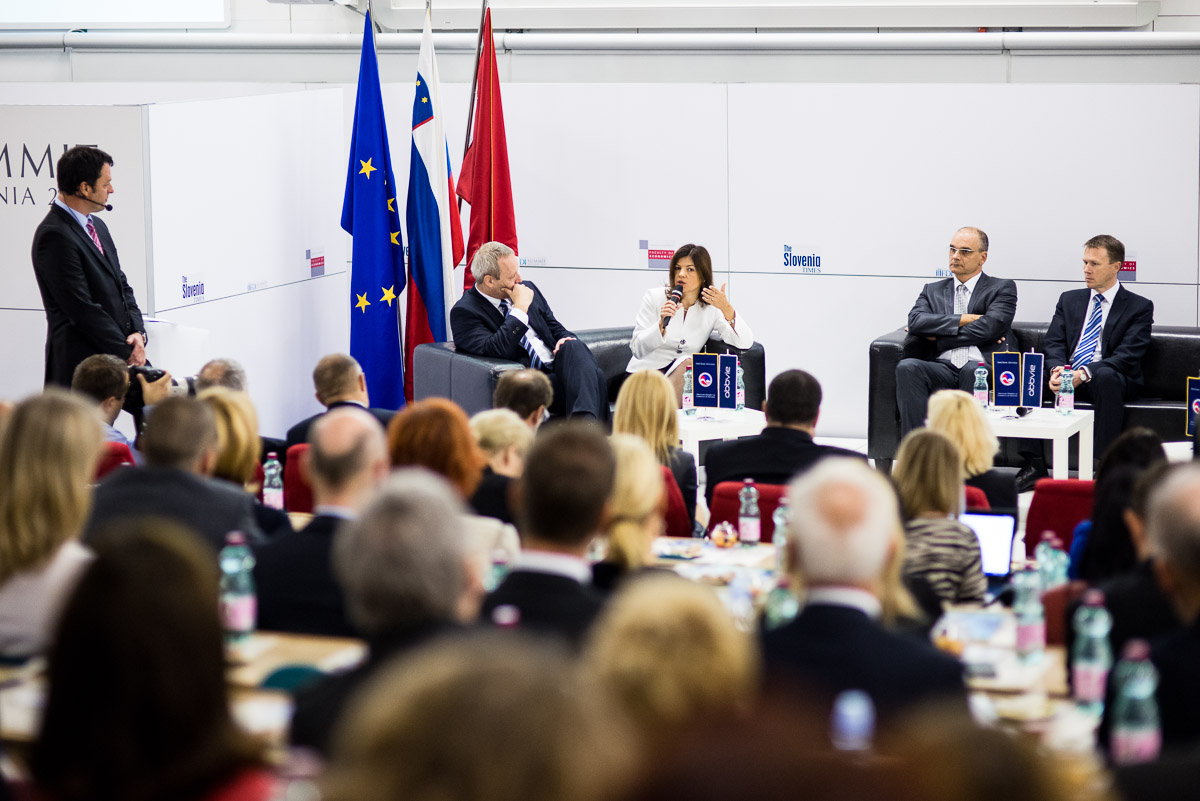 J.A.Mussomeli went on to add: “In November 2010, I had my first speech at the AmCham Business Breakfast on what reforms should be carried out and what should be done. However, three years later, still talking about the same things, even though the government changed. To be honest, it is moving a little, but not enough.” He also notes that in both countries, there are self-appointed leaders and that private interests prevail over the joint. “It is imperative that the Slovenes bridge the differences and make significant steps to avoid international assistance” and later pointed out that the state must cut spending and continue with privatization.
U.S. Ambassador Mussomeli quoted a Sicilian proverb at the end: “Not all things that happen are bad and they do not happen in order to make us suffer. They bring us good things, and I believe that after some recent events Slovenia will become a more competitive and less corrupt government.”
In the roundtable discussion, Matej Potokar, president of AmCham Slovenia and general manager of Microsoft’s unit services in Central and Eastern Europe, spoke about recruiting and corporate governance in state-owned enterprises. He stressed the need to end the privatization because we urgently need a good and predictable business environment where we do not need state-owned companies and private companies, we will always know who the owner is, and how to motivate employees. “For me, the glass is still half full, not half empty,” concluded Potokar.
Sonja Šmuc, Executive Director of the Association Manager, stressed “half full or half empty glass” completed with an interesting perspective – that our glass may be too high. “We know the right areas and the right tools for the solution, but you really do not want to change,” Šmucova noted that in Slovenia there is no problem in that we do not know what to do, but the problem is that we simply do not want to do the right changes because we are afraid.
 Dr. Marko Jaklič, professor at the Faculty of Economics, believes that “we need more competent managers” and urges politics to name supervisors and supervisory board members at the parliamentary level. “95% of people in Slovenia have common sense, and only 5% of people have only their own selfish purposes. How to get rid of them?” added Dr. Jaklič.
Yuri Sidorovich, responsible partner of Deloitte in Slovenia, openly said: “Before I came to Slovenia, I had to deal with the first stereotype of Slovenia. They told me: they will eat you alive, because you are a foreigner. But after long years of working here I am still alive.” He said that privatization is the only solution: “This has been discussed for years and after 20 years it should have become clear to everyone, but for me the case is still black and white”. It would be necessary to ask the people on the street what they think about the national interest: “Do you prefer a thousand in your pocket or an indirect owner of a company, which produces toilet paper?” in reflection closed Sidorovich.
Enzo Smrekar, Senior Executive Director and board member of Droga Kolinska, said that a lot of managers in state firms think and even help decide who the members of their Supervisory Board will be in order to influence them. “I have not seen this anywhere else in the world. In Slovenia, the Supervisory Board members have friendly relations with administrations, instead of challenging them with their views and asking the hard questions. All in order to become more successful,” and believes that the seats of privatized firms will always be abroad, where there will also work highly qualified Slovenes – in nearby cities, such as Vienna and Zagreb.
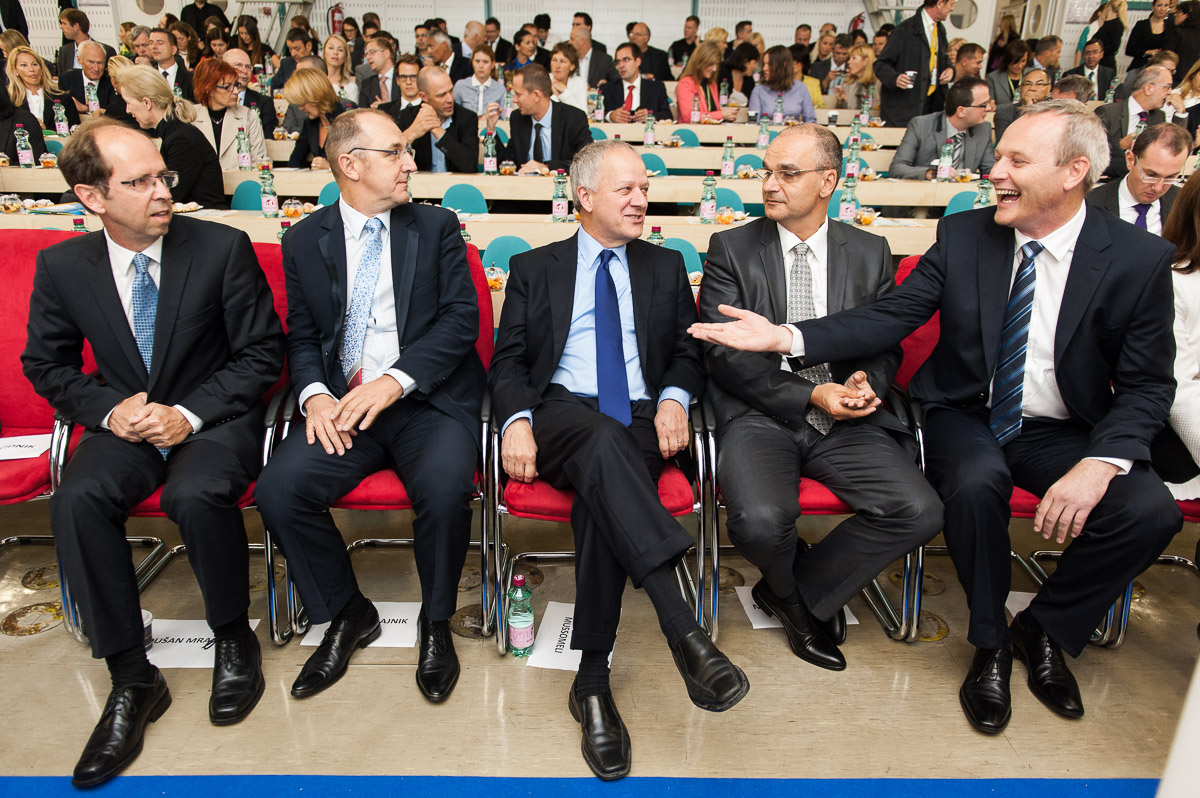 At the conclusion of the round table, the executive director Ajša Vodnik urged interlocutors to make their forecast for Slovenia for the next five years. She herself believes in privatization, ethical management of state-owned enterprises and corporate ethics.
Potokar: “In the next five years, we will be able to balance the political system, we will have ‘blue chips’ in the business world, which will mean a lot at the global level. In addition, we will be recognized as an attractive environment for living, business and tourism.”
Šmuc: ” We cannot rely on no-one, except ourselves. No-one is out there. There is only ‘us’ in this room, in this country.”
Jaklič: “Closing our society leads into a dead-end – we need to open up. Out biggest challenge is to prevent capable Slovenes to escape abroad and how to attract foreigners to come live and work to Slovenia.”
Written by Sabina Alijeski, EFnews
Proofread by Živa Furlan
Photo: Aljaž Hafner, The Slovenia Times

Related news
Publish your comment:
 Upcoming events


