“The EU from the inside?”
PORTOROŽ BUSINESS CONFERENCE 2012
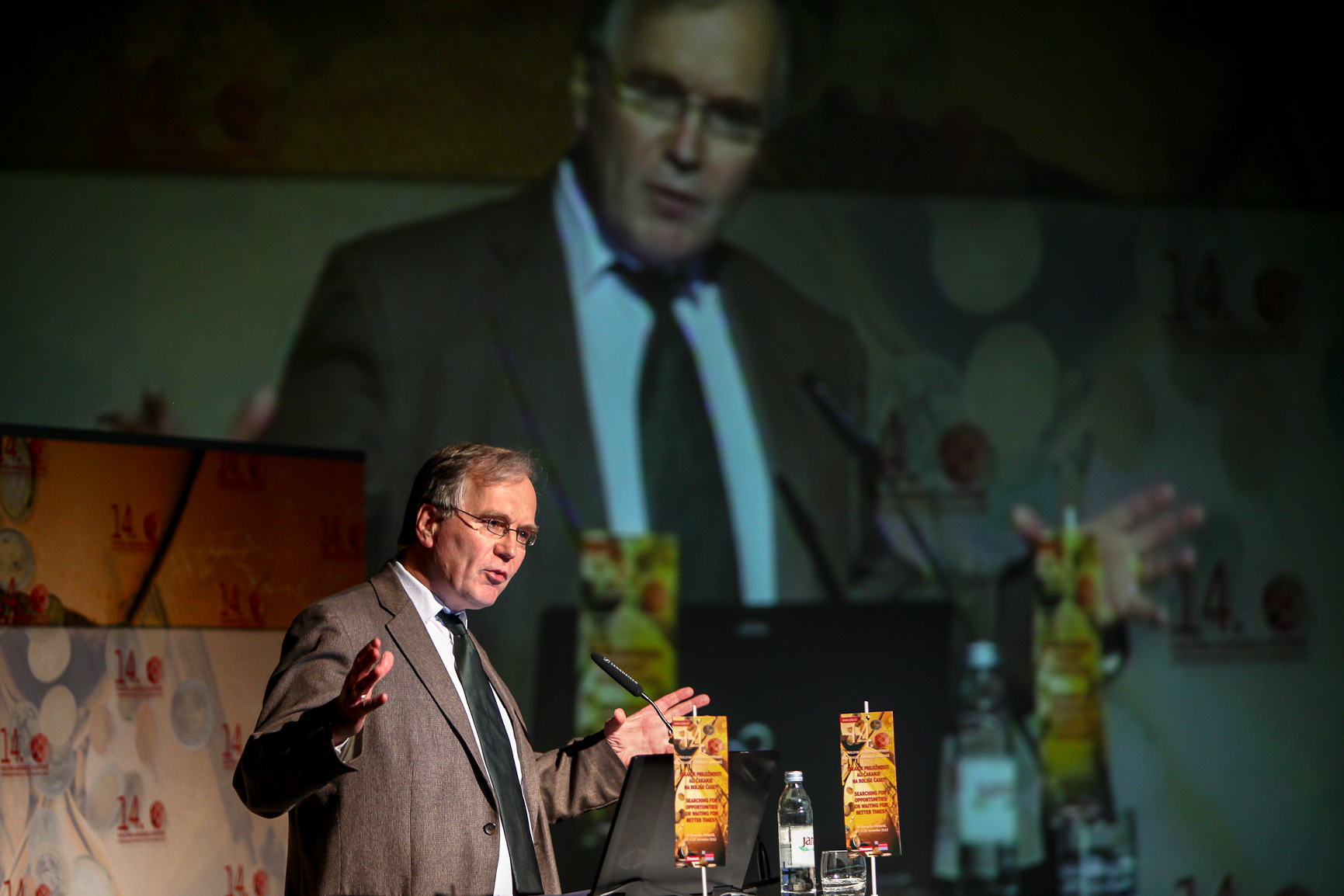
On the 14th Business Conference Portorož, Jürgen von Hagen, University of Bonn and member of Advisory Council of the German Federal Ministry of Economics and Mojmir Mrak, professor at the Faculty of Economics in Ljubljana, discussed about current problems to the EU. The main focus: “How the EU is seen from the inside?”
As introduction of the discussion panel, prof. von Hagen pointed out the problem of the future generations, who will have to inherit the punishment of our excessive spending, unsustainable national debts and large deficits. A special attention was intent on the two main topical issues; a problem of rescuing financial institutions and the different social groups inside the countries that are greedy and self-oriented. No one of these does not care, if there is enough assets for all interest groups and their main goal is to try to get as much as they can from the government money, not caring about our future generations and solving EU fiscal problems in the long-term.
“Countries that cannot deal with financing of its debts are not attractive to the investors. For that reason, they are closer to bankruptcy.”
Prof. von Hagen warned that fiscal union leads to excessive fiscal problems. As some of the solutions, he pointed out: “Common pools need proper governance in order to eliminate the deficit and debt bias. Punishment for contributing to excessive spending since the temptation to deviate is larger in a fiscal union than at the national level. So, the punishment would have to be more severe in a fiscal union through the fiscal contracts with the multi-annual programs. But such contracts need stronger and more effective enforcement in a fiscal union than at the national level. That could the one of the solutions, so the countries would be forces to be disciplined in accomplishing all the goals written in the contracts. Beside this, the establishment of the rescuing funds EFSF and ESM, that would provide a help only for those governments that are implementing structure reforms, is essential. But on the other hand, rescuing of too big countries that would not accomplish structural reforms is not rational.”
“Reforms are crucial.”
Furthermore, prof. von Hagen strongly believes that the common stock problem of Euro is larger than national money stocks. “We should have less discussion about the type of the instruments and more about their governance. It is well known that the governments generally have two instruments to deal with unsustainable debts: surprise inflation and the partial default. Of course, if default is more painful that surprise inflation, resolving unsustainable debts only by default is clearly inefficient. For that reason, an efficient solution always requires some surprise inflation and all the governments prefer inflation to default, logically. But the problem occurs since the monetary policy is not in the national hands anymore, but in the hands of European Central Bank (ECB).”
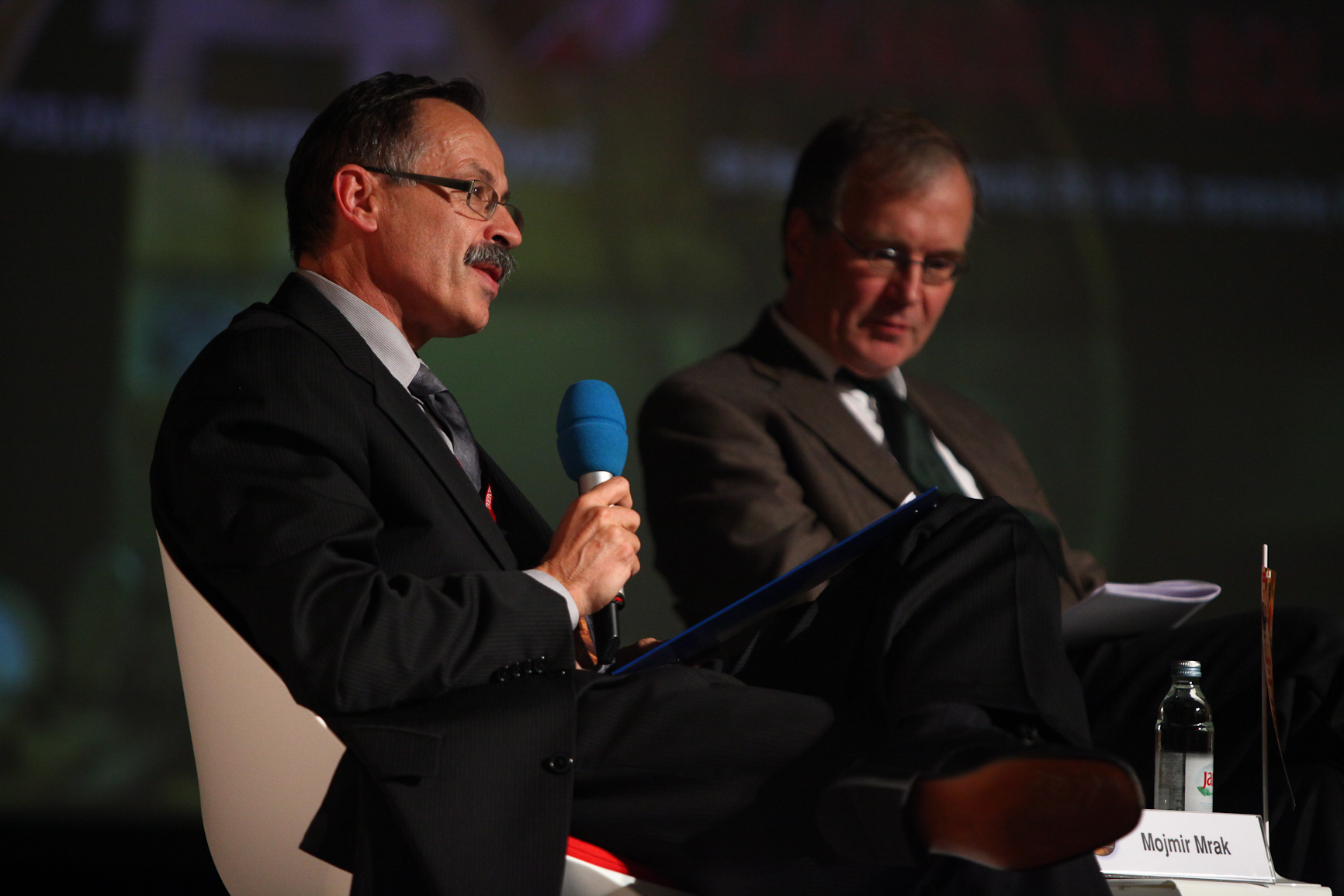 Prof. Mrak, who has led the conversation strongly agreed with prof. von Hagen’s lecture and all the problems that were pointed. He compared the current situation in the Euro zone with the historical crisis story of the eighties years in the past century. His comment was: “Firstly the governments had to understand that the crisis was not liquidity problem, but solvent. And the way International monetary fund (IMF) in cooperation with another institutions intervened, is well known to all of us.”
“Germany as the most developed and stabile country in the Euro zone should have the veto in giving the European help, because that is the country that would participate the biggest part in helping others.”
To sum it all up, as prof. von Hagen said: “We wasted two years in crisis, blaming the speculators. The current austerity program is really insane in this situation. For that reason, reforms are definitely needed.”
Iskra Tanjga, efnews

Image gallery:


Related news
Publish your comment:
 Upcoming events


